The Mediation Process
A clear, structured approach to resolving family conflicts with dignity and respect. Here's what to expect when you choose mediation.
Mediation: A Collaborative Approach
Unlike traditional litigation where parties compete to win, mediation focuses on collaboration to develop solutions that work for everyone. Through compromise and cooperation, both parties can achieve positive outcomes.

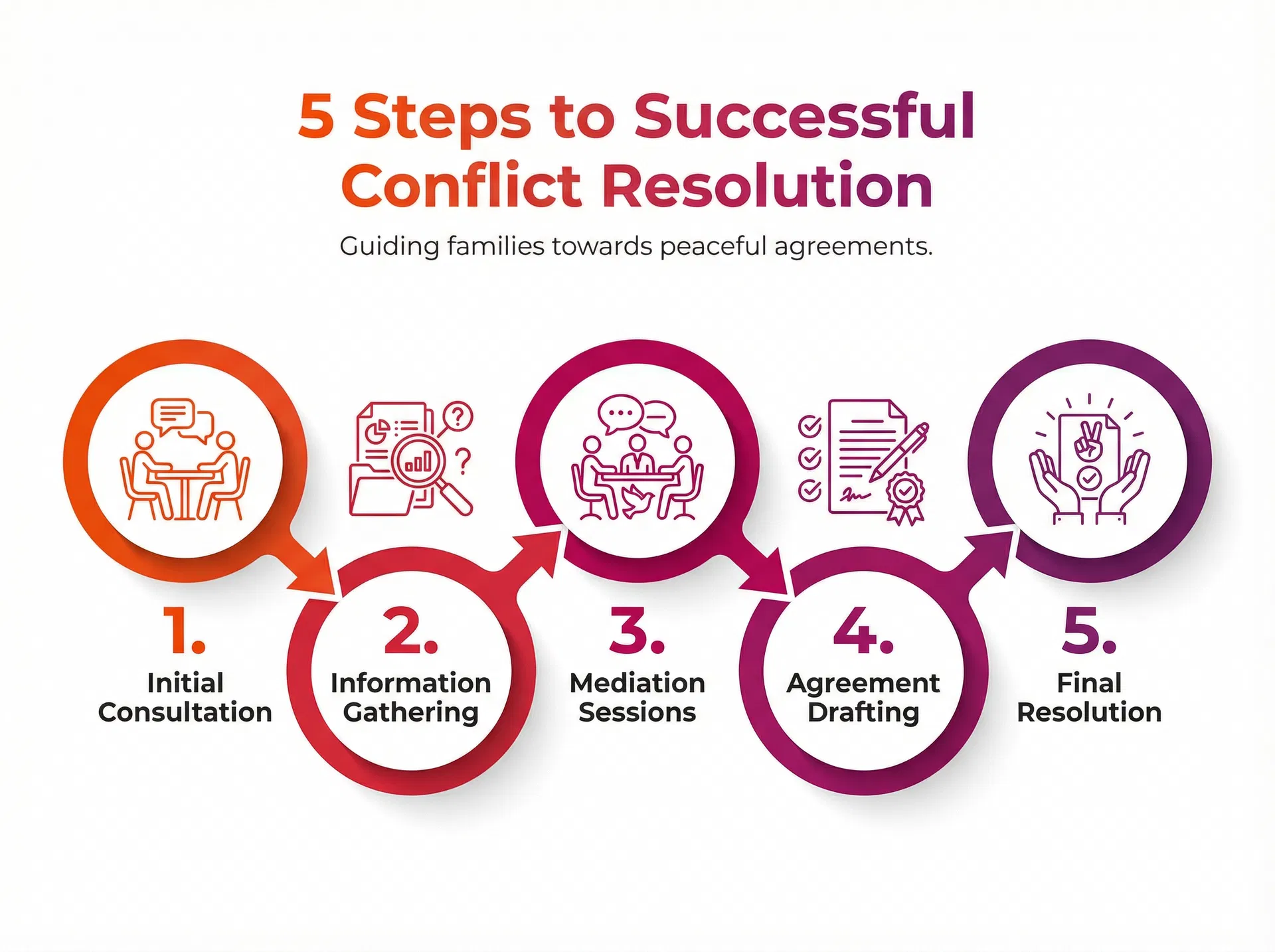
5 Steps to Successful Conflict Resolution
Stop and Recognize Your Own Emotions
Take time to understand your feelings before reacting. Self-awareness is the first step to productive dialogue.
Watch Your Words
Avoid put-downs, insults, or blaming. Communicate respectfully to keep discussions constructive and focused on solutions.
Listen to the Perspectives of Other People
Active listening helps you understand the other party's needs and concerns, creating a foundation for mutual agreement.
Identify the Problem
Clearly define the issues at hand. Understanding the root problem helps both parties work toward effective solutions.
Agree Upon a Solution
Work together to find mutually beneficial agreements that both parties can support and implement moving forward.
The Mediation Journey: Step by Step
Our mediation process helps couples move from conflict to resolution through structured, professional guidance. The goal is to reach agreements that work for both parties and any children involved.
Initial Consultation
The initial meeting ($150) enables couples to make an informed decision whether the process is consistent with their expectations, whether divorce mediation is the right choice for them, and whether they feel comfortable with the particular mediator. After the initial meeting, if you decide to participate in the mediation process, an appointment for your first mediation session will be set.
- 60-minute consultation with Mark Parham
- Discuss your situation and goals
- Learn about the mediation process
- Assess if mediation is right for you
- Determine comfort level with the mediator
- Schedule first mediation session if proceeding
Information Gathering
Both parties provide necessary information and documentation about finances, assets, children, and other relevant matters. Full disclosure is essential for fair mediation.
- Financial statements and tax returns
- Property and asset documentation
- Debt and liability information
- Income and employment details
- Children's needs and schedules
Negotiation Sessions
At the first mediation session, the parties and mediator begin organizing all relevant information so that both parties and the mediator are fully informed before decision-making begins. Well prepared parties usually complete that informational process in one or two sessions. If there are any urgent or immediate problems, including those involving finances, living arrangements or children, temporary agreements may be entered into for the duration of the mediation process.
Through structured sessions, we work through each issue systematically. The mediator facilitates productive discussions in a neutral setting where all participants engage in courteous, respectful and focused dialogue. No decisions are made by an outsider—the neutral mediator assists the parties in finding mutually acceptable solutions.
- Child custody and parenting plans
- Child and spousal support
- Property and asset division
- Debt allocation
- Other relevant issues
Agreement Drafting
Once agreements are reached, the mediator will draft a comprehensive Marital Settlement Agreement (MSA) that documents all decisions and forward it to the parties for their review. Parties are free to have their independent attorneys review the agreement and provide any additional advice. The parties then return to mediation to review any further issues and finalize the agreement.
- Comprehensive written separation agreement
- Clear terms and conditions for all issues
- Detailed parenting plan (if applicable)
- Financial arrangements and property division
- Review period for both parties
- Option for independent attorney review
- Final mediation session to address any questions
Finalization & Court Filing
Once your mediation is complete and your agreement is finalized, filing with the court is a separate process. You'll need to contract with a paralegal service to prepare and file the necessary court documents. This typically costs $300-$500 and includes preparing all required forms and filing them with the court. Once filed and approved by a judge, your divorce is finalized according to your mediated agreement.
- Guidance on court filing procedures
- Paralegal services required for filing ($300-$500)
- Required forms and documentation preparation
- Court filing and processing
- Timeline expectations (varies by county)
- Post-mediation support available
What to Expect During Mediation
Session Length
Most mediation sessions last 2-3 hours. This allows enough time for productive discussion without becoming overwhelming.
Number of Sessions
The average couple has between three and six meetings with their mediator in order to come to a complete agreement about all issues. Our package includes up to 5 sessions for $3,000, then $250/hour.
Timeline
The entire mediation process typically takes 2-4 months from start to finish, much faster than traditional litigation.
Confidentiality
All mediation sessions are completely confidential. What's discussed in mediation stays in mediation.
Neutral Environment
Sessions take place in a comfortable, neutral setting. The mediator ensures both parties have equal opportunity to be heard.
Legal Counsel
You may consult with your own attorney at any time during the process. We encourage reviewing agreements with legal counsel.
Frequently Asked Questions
Do we both need to attend every session?
Both parties should attend the initial consultation and the final session to review and sign the agreement. However, individual sessions may be held during the mediation process when appropriate. The mediator will work with both parties to determine the best approach for your situation, ensuring both spouses have equal opportunity to participate in discussions and decision-making.
What if we can't agree on everything?
The mediator helps facilitate productive discussions and explore options. If you reach an impasse on certain issues, you can still mediate the issues you do agree on and address remaining issues through other means.
Is the mediator our attorney?
No, the mediator is a neutral third party who facilitates discussions. The mediator does not provide legal advice to either party. You may consult your own attorney at any time.
How long does the process take?
Most mediations are completed in 2-4 months. The exact timeline depends on the complexity of your case and how quickly you can schedule sessions.
What happens after we reach an agreement?
The mediator drafts a Marital Settlement Agreement documenting all decisions. After review, you file this agreement with the court along with other required divorce paperwork.
Can we modify our agreement later?
Yes, if circumstances change significantly, you can return to mediation to modify custody, support, or other arrangements. This is much easier and less expensive than going back to court.